Tavern Meetings
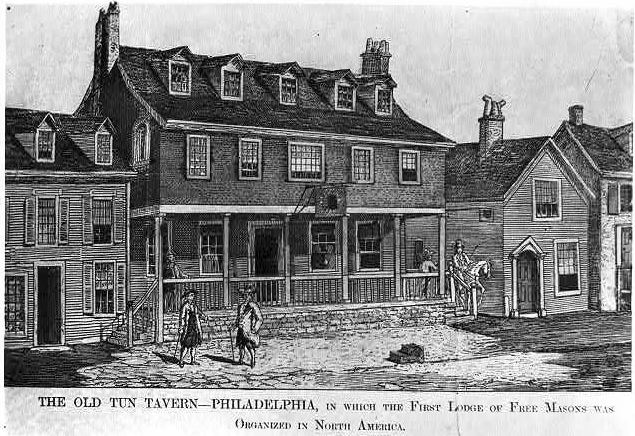
Before having a dedicated building for meetings, Pennsylvania Masons often met in local taverns. The earliest meetings were held in Tun Tavern, where Benjamin Franklin became a Mason in 1731. The first Pennsylvania Grand Lodge meeting took place there in 1732.
1755
Freemason’s Lodge
As Freemasonry in Pennsylvania grew, taverns became too crowded to host meetings of the Grand Lodge. The year 1755 marked the opening of the Freemason’s Lodge, the first dedicated meeting space for Masons in the Western Hemisphere. During the Revolutionary War years, the building was utilized as a jail for suspected loyalists. It was sold in 1785 due to financial difficulties the fraternity and many others faced post-Revolutionary War. After the building was sold, Masons held meetings in a variety of places, including homes, the historic Quaker Meeting House and even Independence Hall!
1802
Pennsylvania Freemason Hall
Pennsylvania Freemason Hall was purchased as a new dedicated space for Freemasonry.
1811
Masonic Hall
As Pennsylvania Masons grew in number, a larger space was needed to accommodate them. Masonic Hall was constructed and put into use in 1811. Unfortunately, the building caught fire just eight years later. It was rebuilt the following year. In addition to hosting meetings, the rebuilt structure played host to temporary exhibits from other iconic Philadelphia institutions, as well as the first-ever Philadelphia Flower Show.

Image Credit: David Chillas, World Digital Library
1855
New Masonic Hall

Image Credit: Library Company of Philadelphia
As Pennsylvania Freemasonry continued to grow in popularity, the Masonic Hall was again rebuilt to accommodate a larger membership. A striking, Gothic-style building was constructed on the former site of Masonic Hall. The New Masonic Hall quickly became too small for the growing membership and costly to maintain.
1873
Masonic Temple

The Masonic Temple was designed by James H. Windrim. Construction began in 1868 at its current location at One North Broad Street. Its completion in 1873 predated Philadelphia City Hall’s by nearly three decades.
1889
Egyptian Hall Dedication

A favorite on tours to this day, Egyptian Hall was the first room to be decorated and was dedicated in 1889. The interior rooms of the Masonic Temple were still being designed until 1908.
1902
A Presidential Visit
In 1902, the Masonic Temple held an event celebrating the 150th anniversary of George Washington becoming a Mason. President Theodore Roosevelt was in attendance. His invitation and attendance record are currently on display in the museum.
1908
Opening of the John Wanamaker Resource Center
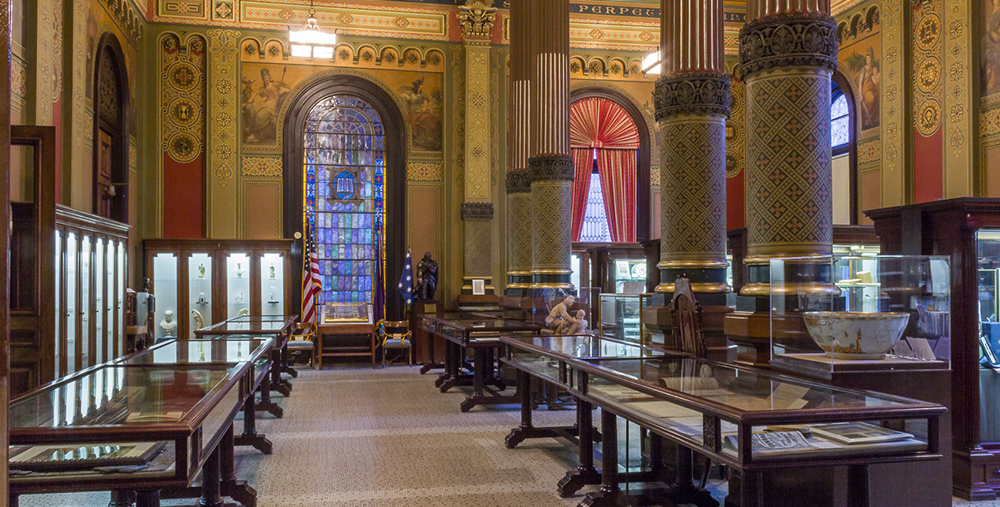
In 1908, Brother John Wanamaker founded the John Wanamaker Resource Center, which houses The Masonic Library and Museum inside the Temple. The library and museum were open to both Masons and the public as a premier site for Masonic learning and history.
1963
Installation of Corinthian Hall Rug
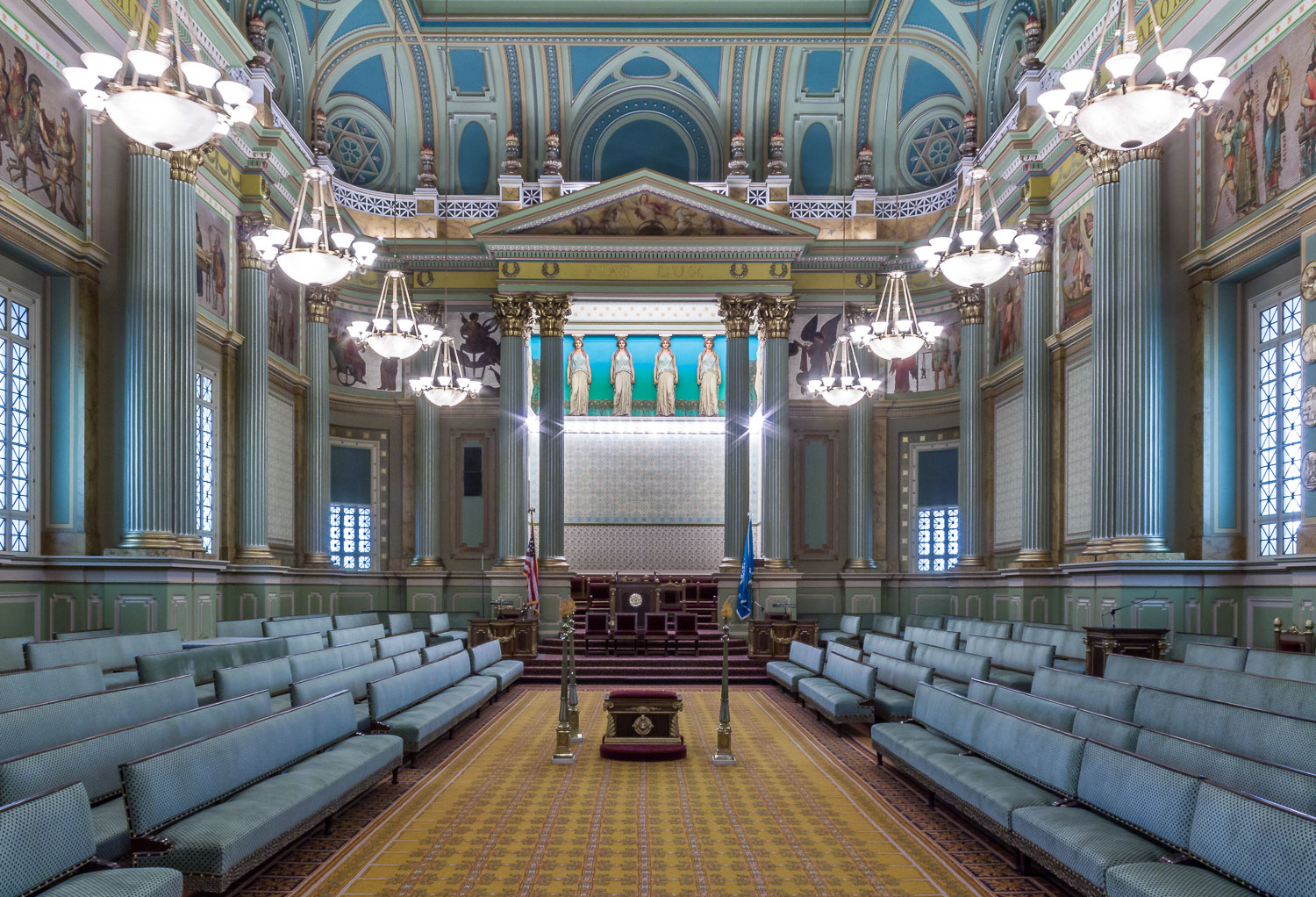
Corinthian Hall’s Roman-inspired design was finalized in 1903, however the stunning rug that lines the 105-foot-long hall was installed in 1963 after it was gifted by the Grand Lodge of Puerto Rico. There is a deliberate imperfection in one of the leaves in its design to symbolize the “imperfection of man.”